Dive Target: Perfect Splash
Free Inc LimitedCasual
3.735.00 Reviews
- Version
- 2.1.3
- Installs
- 1.00M
- Age Rating
- Teen
Screenshots
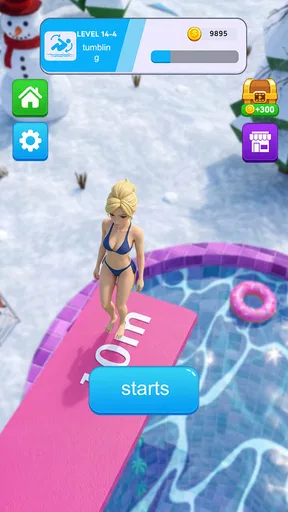
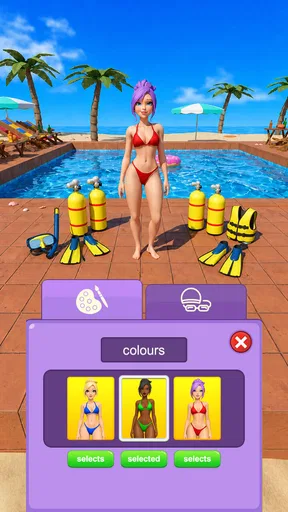
Our Review of Dive Target: Perfect Splash
 Analysis by Appyee
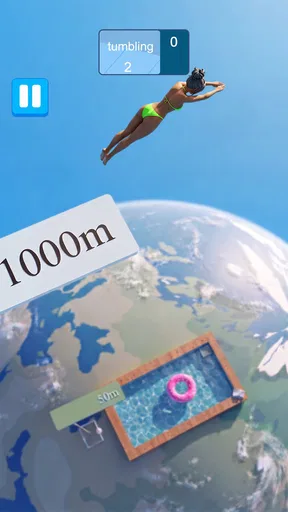
I spent time with Dive Target: Perfect Splash as a quick, casual game built around diving, flips, and landing in the pool with better control. Its idea is easy to understand almost immediately: line up the dive, commit to the movement, and try to make the splash count. That simplicity is its biggest attraction. I can open it when I have only a few spare minutes, play without learning a complicated ruleset, and stop without feeling as if I have abandoned a long campaign.
The game comes from Free Inc Limited and sits in the casual section, with a free download and a Teen content rating. It has passed the one-million-install mark, while its average sits at 3.7 from roughly four hundred ratings and a few dozen written reviews. Those figures suggest a game with a meaningful audience, but not one that has universally impressed everyone. My own reaction is similar: the basic diving loop is approachable and pleasant, although its appeal depends heavily on whether you enjoy repeating short timing challenges.
How the diving loop feels in everyday play
The first thing I noticed is how quickly the game gets to its point. There is no need to spend a long session understanding a character build, a map, or a collection of complicated menus. The focus is the dive itself. That makes it a natural choice for a bus ride, a short break between tasks, or the few minutes before going to sleep when I want something more interactive than scrolling but less demanding than a full action game.
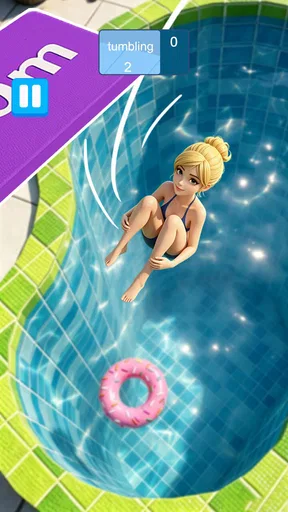
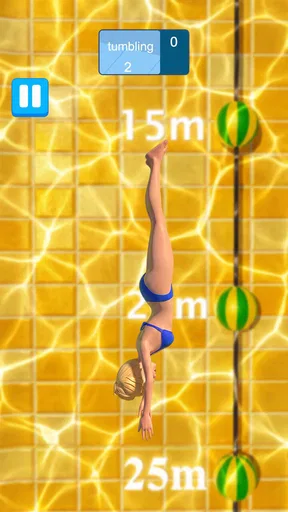
The pool setting also gives the experience a lighter mood than many competitive mobile games. The flips add a small sense of risk because a stylish movement is only useful if the landing works. I found myself making a simple mental adjustment after each attempt: was the problem my timing, my position, or the decision to attempt a more ambitious move? That tiny cycle of action and correction is what keeps the game from feeling like a completely passive animation.
The real strength is its low entry cost in attention. I do not need to reserve a long uninterrupted session, and I can return after a gap without reconstructing a complicated plan. For casual players, that matters more than a large feature list. The game works best when treated as a compact reflex diversion rather than as a deep sports simulation.
What to expect from its speed
Perceived speed here is less about fast menus or a frantic pace and more about how quickly a player can move from one attempt to the next. The premise is direct, so the game feels easy to pick up. There is little conceptual overhead between opening it and performing a dive. That makes the first few minutes feel efficient, especially for someone who wants an immediate activity rather than a tutorial-heavy experience.
At the same time, quick access does not automatically mean endless variety. A short-form diving game can feel fresh while I am still improving my timing, then become more repetitive once the basic motion is familiar. I would not choose it expecting the changing objectives, character development, or broad content rotation found in a larger sports title. Its speed comes from being focused, not from offering a huge amount to explore.
One useful way to play is to set a small personal target before starting. Instead of treating every attempt as a vague search for a better result, I can concentrate on cleaner landings or more controlled flips. This turns a brief session into a practice routine and makes the repetition feel more purposeful. It is a better fit for the game than expecting it to provide a long narrative arc.
Where short sessions become more demanding
The most demanding moments are likely to arrive when I stop accepting merely acceptable dives and start chasing a cleaner result. A basic attempt can feel relaxed, but adding a flip introduces another decision: should I prioritize a more impressive movement or protect the landing? That trade-off gives the game a little more texture than a simple tap-and-watch experience.
During repeated attempts, the main pressure is mental rather than physical. I may understand what I want to do, yet still mistime the action when I rush. My practical tip is to watch the rhythm of the dive instead of tapping impulsively after a mistake. A failed attempt is more useful when I identify the moment that went wrong and change one thing on the next try. Changing several things at once makes it difficult to learn whether the adjustment helped.
This is also where the game may lose players who want a generous, almost automatic casual experience. The flip challenges ask for at least some attention. Someone looking for a purely idle app may find the timing element inconvenient, while a player who enjoys small mechanical tests will probably appreciate that the pool setting is not just visual decoration.
Using it in a realistic daily routine
Imagine waiting for a takeaway order with one hand free and only a few minutes available. I would use this game for a handful of dives, focusing on controlled attempts rather than trying to force a perfect sequence. If the session goes well, I can put the phone away without losing a major story beat. If it goes badly, the short format makes another try feel manageable rather than exhausting.
It can also work as a transition between more demanding activities. After reading, studying, or working, I sometimes want a game that gives my attention a narrow target without requiring strategic planning. The diving format suits that moment. However, I would avoid using it when I need complete concentration on something nearby, because even a casual timing challenge can encourage “one more attempt” once I start chasing a better landing.
Another practical approach is to play with a clear stopping rule. I might stop after a certain number of attempts or once I achieve the movement I was practicing. This prevents the simple loop from turning into unplanned repetition. That advice is especially relevant for players who enjoy score improvement but do not want a casual game to consume an entire break.
Stability and returning after interruptions
My view of reliability is tied to how comfortably the game fits into short visits. A casual title should be easy to resume after putting the phone down, and this one is conceptually well suited to that pattern because its central activity is compact. I can approach it as a self-contained break rather than needing to remember a complicated objective from a previous session.
Still, the experience is not the same as a fully featured game with a large progression system. If I expect extensive continuity between sessions, I may find the return less compelling because the attraction is the next dive, not a richly developed long-term journey. That is not necessarily a flaw; it is a reminder to judge the game by its intended scale.
When I am assessing a mobile game for regular use, I also pay attention to how it behaves after an interruption. A call, a notification, or a quick switch to another app can break the rhythm of a timing-based attempt. My advice is to treat individual dives as disposable units rather than assuming every session will be uninterrupted. That mindset makes the format feel more forgiving.
The current release is version 2.1.3, and the game supports devices running Android 8.0 or later. Those details make it accessible to many Android users, including people who do not own a recent handset. They do not guarantee identical behavior on every model, though, so I would still keep expectations realistic on older hardware and avoid judging the game solely by how it feels on a newer phone.
Device limits and resource expectations
Because this is a focused casual diving game rather than a large open environment, I would approach it expecting a lighter experience than a visually expansive action game. The limited premise is an advantage for quick play: there is no obvious reason to prepare for a long, resource-heavy session. That said, perceived smoothness can vary with the phone, background activity, and the age of the operating system.
On an older compatible device, I would close demanding apps before playing if the controls feel delayed or the phone is already busy. That is not a special requirement unique to this title; it is simply sensible for any game where timing affects the result. A small delay can make a dive feel like a skill failure when the real issue is the device struggling with other work.
Battery expectations should also be practical. A few short attempts are a different workload from leaving any game open for a long stretch. I would use it as a brief activity rather than as an all-day entertainment replacement, particularly on a phone with an aging battery. The game’s casual structure encourages that pattern naturally, and it keeps the resource cost easier to manage.
Storage and compatibility are straightforward considerations. It is free to download, supports Android 8.0 and newer, and is available to a substantial installed audience. I would still check the operating system before recommending it to someone using an older phone, because compatibility is the first barrier. For a friend with a supported Android device who wants a small game rather than a major download, this is an uncomplicated candidate.
Who will enjoy it most
I would recommend it to players who like short attempts, simple controls, and the satisfaction of improving a physical action through repetition. It is particularly suitable for casual gamers who enjoy a little timing pressure but do not want a complex sports career mode. The pool-and-flip theme gives the game a clear identity, and the free price makes it easy to try without committing money first.
It may also suit families with older teenagers, keeping in mind the Teen content rating. I would not describe it as a game designed specifically for young children, and I would use the rating as a reason to make a personal suitability decision rather than assuming that every age group is covered equally.
Players who should skip it are those looking for realistic diving physics, extensive customization, online competition, or a deep progression system. The appeal is concentrated in the immediate challenge. If I want a game that gives me a large world to investigate or a long-term roster to manage, I would choose a different category of mobile title. This one is better when I want a small, repeatable activity with a clear physical goal.
How it compares with familiar casual alternatives
Compared with an endless runner, the diving format feels more deliberate. An endless runner often asks me to react continuously as the environment moves toward me, while this game appears to center attention on the quality of each dive and flip. That can make it calmer for players who dislike constant obstacles, although it may feel less exciting to anyone who needs uninterrupted motion.
Compared with a puzzle game, it offers less emphasis on planning several moves ahead. The satisfaction comes from execution rather than arranging a board or solving a layered problem. I would choose the pool challenge when I want immediate physical feedback, and a puzzle when I want to think slowly and methodically. Neither replaces the other; they serve different moods.
Compared with a larger sports game, the advantage is convenience. I can get to the central activity quickly, without managing a team or learning a broad ruleset. The trade-off is depth. A dedicated sports title will usually provide more systems, more variety, and a stronger sense of a season or career. Dive Target is the better option only when that extra structure would feel like work instead of entertainment.
Small habits that improve the experience
My first tip is to separate style from consistency. A flashy flip is tempting, but a reliable landing gives me a clearer basis for learning. I would begin by finding a repeatable rhythm, then add more ambitious movement once the basic action feels comfortable. This avoids turning every attempt into a random experiment.
My second tip is to use short focused sessions. Playing until frustration builds can make the controls feel worse than they are. A few deliberate attempts, followed by a break, preserve the light mood that makes the game attractive in the first place. This is especially useful when I notice myself repeating the same mistake without changing my timing.
My third tip is to test the game in the way I expect to use it. If the main purpose is a quick break, I would not judge it after an unusually long session. Conversely, if I need a game for extended travel, I would check whether the repeated dive loop remains satisfying after the novelty fades. The right question is not whether it contains everything; it is whether its focused loop matches my available time and patience.
A final trade-off is worth keeping in mind: a free casual game is easy to try, but that convenience does not guarantee that it will become a long-term favorite. The current rating of 3.7 reflects a mixed reception rather than a universal recommendation. I read that as a reason to approach it with measured expectations. The game can be enjoyable when its narrow purpose is exactly what I want, but it is not a substitute for a broader mobile sports experience.
My performance verdict
After looking at its speed, short-session behavior, compatibility, and practical demands, I see Dive Target as a focused game with a sensible place on an Android phone. Its strongest performance quality is not spectacle; it is efficiency. The game gets me to a simple diving challenge quickly, gives each attempt a clear purpose, and works naturally in small gaps during the day.
Its main limitation is the same feature that makes it approachable. The narrow loop can become repetitive for players who need constant novelty, and the game does not appear suited to people seeking a deep simulation or a long-form competitive structure. I would also be careful about expecting an identical experience across every compatible device, particularly when playing on older hardware or with many background tasks active.
For me, the best recommendation is conditional but positive. If you want a free casual game about pool dives and flip timing, and you are happy to improve through repeated short attempts, it is worth trying. If you need a large progression system, rich strategy, or a sustained story, I would point you elsewhere. Choose it for its compact timing challenge, not for features it was never meant to provide.
Free Inc Limited has kept the concept direct, and that directness is what makes the game easy to understand. With a one-million-plus install base, a Teen rating, and support beginning with Android 8.0, it has a broad practical reach. My final view is that it works best as a small, low-commitment diversion: pleasant when I want a few poolside attempts, less convincing when I ask it to carry a long gaming session.
Verdict
Strengths of Dive Target: Perfect Splash
- Simple controls make it easy to start playing immediately.
- Short rounds are ideal for quick entertainment sessions.
- Satisfying splash effects make successful dives feel rewarding.
- The game offers a relaxing experience without complicated mechanics.
- Works well for players looking for casual, low-pressure gameplay.
Limitations of Dive Target: Perfect Splash
- Gameplay can become repetitive after extended play sessions.
- Progression may feel limited for players seeking deeper challenges.
- Precision-based levels can occasionally feel frustrating.
- Some visual effects may reduce clarity during busy moments.
- Replay value depends heavily on personal interest in score improvement.
Similar Picks in This Category
View All
My Talking Angela
Outfit7 Limited4.2

My Talking Tom
Outfit7 Limited4.3

Pou
Zakeh4.2

My Talking Tom 2: Pet Game
Outfit7 Limited4.3

Candy Crush Saga
King4.6

Bridge Race
Supersonic Studios LTD4.1
Frequently Asked Questions
What is Dive Target: Perfect Splash about?
Dive Target: Perfect Splash is a casual diving game focused on timing, accuracy, and stylish water entries. You guide a diver through jumps and attempt to land in the ideal target area while avoiding awkward or poorly timed splashes. Each successful dive rewards precision, making the game easy to understand but increasingly challenging as stages demand faster reactions and better control.
Is Dive Target: Perfect Splash suitable for beginners?
Yes. The game uses a simple concept that beginners can understand quickly, and the early challenges generally provide a comfortable introduction to its controls and timing mechanics. However, achieving consistently perfect dives requires practice. Players who enjoy short, skill-based sessions should find it accessible, while more demanding levels may appeal to users looking for a greater challenge.
Does the game require an internet connection?
Dive Target: Perfect Splash may be playable without a constant internet connection, which is useful for quick sessions while traveling or when mobile data is unavailable. Nevertheless, some features—such as advertisements, online rewards, updates, or other connected services—can depend on internet access. It is best to check the store listing and test the game after installation if offline play is important to you.
Are there advertisements or in-app purchases?
As with many free-to-download casual games, Dive Target: Perfect Splash may include advertising and optional in-app purchases. Advertisements can appear between attempts or stages, while purchases may be offered for removing ads, unlocking content, or obtaining additional benefits. Before downloading, review the current Google Play or App Store listing because monetization options can change with updates.
What devices are compatible with Dive Target: Perfect Splash?
Compatibility depends on the version available for Android or iOS and the requirements set by the developer. Most relatively recent smartphones and tablets should be able to run a lightweight diving game, although performance may vary on older devices. Check the official store page for the required operating-system version, available storage, and any device-specific limitations before installing.
Play our best games!


